

HCECA Apprenticeship
Program Details
A certified, reputable apprenticeship program is the best way into a construction trade.
Besides a very low-cost education (which means MINIMAL DEBT for YOU), apprenticeships offer a look into the day-to-day work you’ll be doing in your trade.
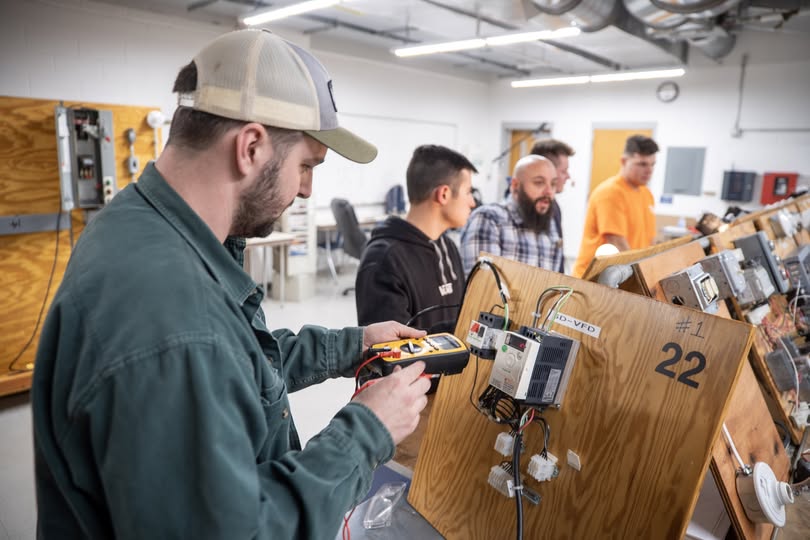
Classroom Instruction
In addition to hands-on training in the field, you’ll participate in trade-related classroom instruction designed to build confidence and sharpen your skills, leading to true craftsmanship.
Requirements
- You’ll complete a minimum of 144 hours of classroom instruction each year.
- Classes are held twice a week from 6:15–9:00 PM, running September through April.
Sample of What You'll Learn
- Electrical safety
- Electrical theory and foundational principles
- AC/DC circuitry
- Motors, generators, and transformers
- Grounding and bonding
- Solar photovoltaic (PV) systems
- Power quality and efficiency
- Raceway, box and conductor sizing
- Electrical load calculations
- Understanding and implementing the National Electrical Code
- Residential, commercial, and industrial applications
- Conduit bending and hands-on labs
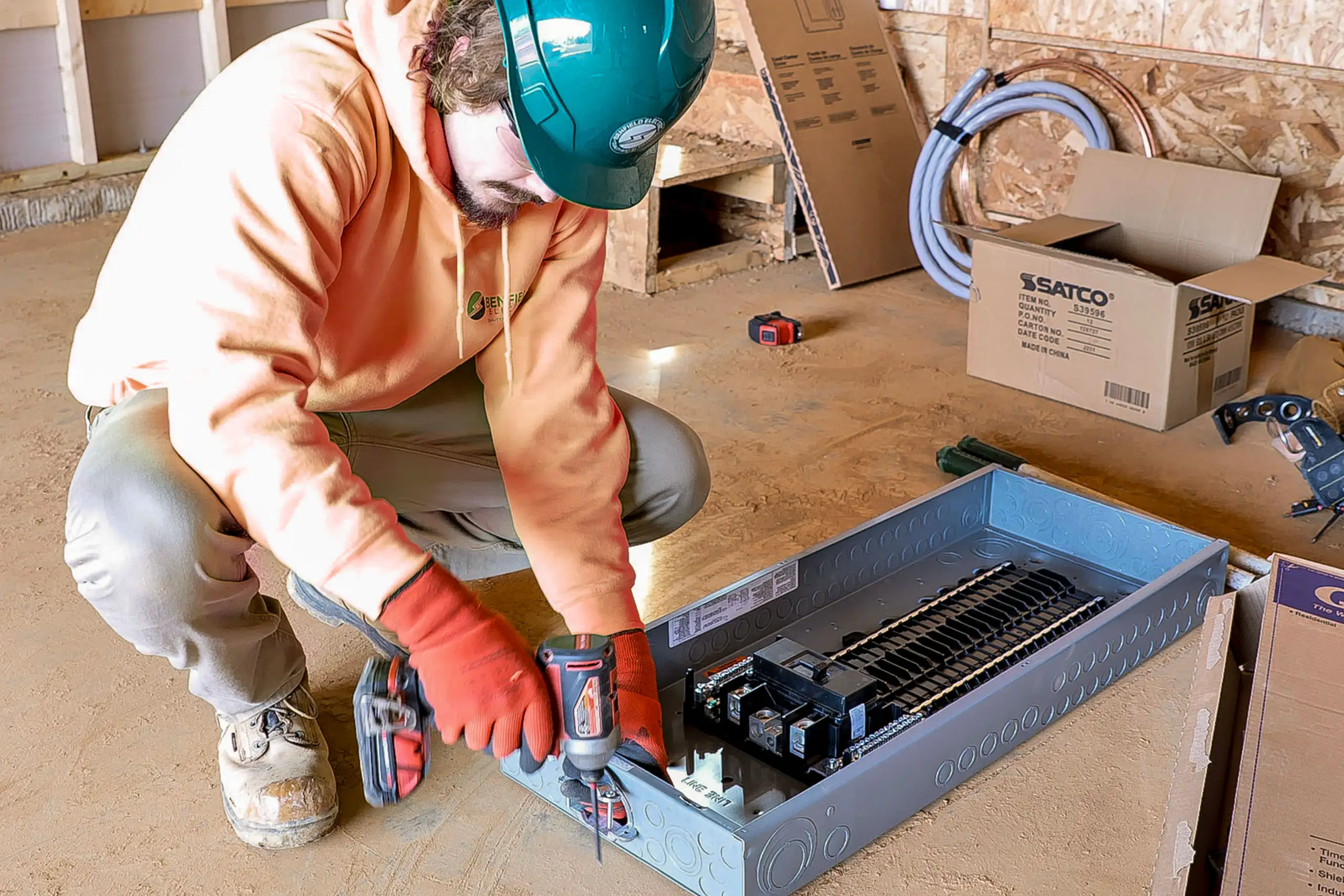
On-the-Job Training
All apprentices must be employed full-time by a contractor who is a member of HCECA. This professional association of member contractors sponsors our apprentices and is committed to providing high-quality on-the-job training (OJT) for future generations of electricians.
Requirements
- You’ll complete 2,000 hours of paid, hands-on training each year—the equivalent of a full-time job, for a total of 8,000 hours over four years.
Looking for employment with a member contractor?
For a current list of our member contractors that may be hiring, click here.
Not sure if your employer is an HCECA member?
Just give us a call at 443-412-2800 and we’ll let you know! Any employer with a master electrician on record can join for a low annual membership fee of $125.
Here are just a few of the many benefits of training through an apprenticeship:
- Earn While You Learn: Start building your career right away, earning a paycheck while gaining the skills and certifications employers value. As your experience grows, so does your earning potential.
- Keep Growing: Learning doesn’t stop after your apprenticeship. You’ll continue developing new skills throughout your career, opening the door to higher pay, advancement, and new opportunities.
- Built-in Support System: You’re never on your own. From experienced instructors to skilled mentors on the job, you’ll have guidance every step of the way.
- A Dynamic Experience: No two days are the same. You’ll spend most of your time gaining a variety of hands-on experiences in the field, while reinforcing your knowledge in the classroom twice a week.
- Build Confidence: Whether you’re on a jobsite or in the classroom, everyone understands that you’re here to learn. With dedication and a strong work ethic, you’ll gain the confidence and skills needed to succeed in your career.
Your apprenticeship will be both challenging and highly rewarding.
While the experience may be demanding at times, the skills and experience you gain will set you up for long-term success. Upon completion, with a journeyperson certificate, a wide range of career opportunities will be available to you. With a combination of real-world experience and classroom instruction, you’ll stand out with a strong, competitive edge in the trade.
Electricians install, maintain, and repair electrical systems that power homes, businesses, and industrial facilities. They also work on equipment and machinery across a wide range of industries, helping keep operations running safely and efficiently.
Some electricians focus on new construction, installing wiring and systems in residential, commercial, or industrial buildings. Others specialize in maintenance, upgrading existing systems, troubleshooting issues, and repairing electrical equipment. Many electricians develop skills in both areas over time.
Their work begins with reading blueprints and technical diagrams, which map out circuits, outlets, panels, and other components. From there, they install and connect wiring to circuit breakers, transformers, and various electrical systems, all while following state and local building codes, as well as the National Electrical Code, to ensure safety and reliability.
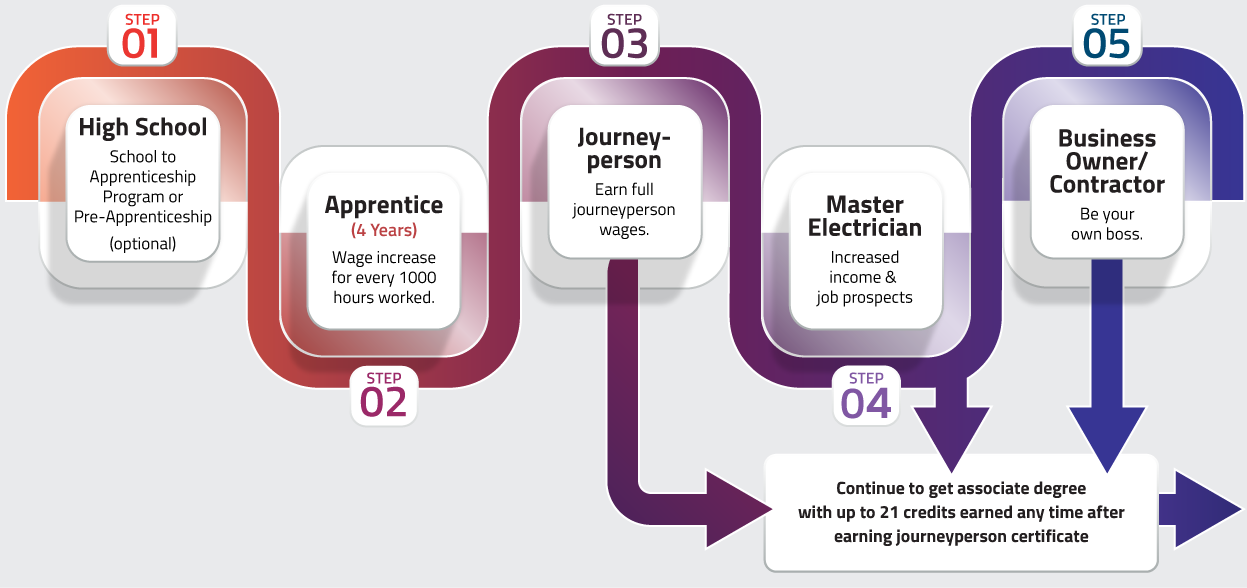
After completing this program, you’ll earn your Maryland Journeyperson Certificate, boosting your marketability as an electrician and qualifying you for a higher, journeyperson-level wage. You’ll graduate with a strong combination of hands-on experience and classroom instruction, giving you a competitive edge in the field. From there, you can continue advancing your career by working toward becoming a Master Electrician. You’ll also have the opportunity to further your education, with up to 21 credits eligible to be applied toward certain Harford Community College associate degrees.
- Electrical Apprentice (while in the Apprenticeship Program) – Gains hands-on experience installing, maintaining, and repairing electrical systems, conductors, and related equipment under the supervision and guidance of a journeyperson electrician.
- Journeyperson Electrician – Independently installs, modifies, and repairs electrical systems and components. Reads blueprints, terminates cables, troubleshoots wiring, and often supervises apprentices.
- Master Electrician –Brings advanced expertise to installing and overseeing electrical work. May supervise journeyperson electricians and has the opportunity to run their own business.
- Project Manager – Oversees electrical projects from start to finish, coordinating crews, materials, tools, and timelines. Works from plans and specifications to ensure projects stay on schedule and meet quality standards.
- Estimator – Prepares detailed and competitive project bids by analyzing plans, calculating material and labor needs, and ensuring accurate cost and time estimates. Provides careful analysis of project plans to guarantee accurate labor, supply, and time schedule estimates.
- Owner/Contractor – Leads and manages a business, oversees employees and projects, and ensures successful operations from planning through completion.
- Electricians are essential to everyday life, keeping homes, businesses, and critical infrastructure powered and running safely.
- Demand for skilled electricians continues to rise, not only due to increased construction and electrical needs, but also as experienced workers retire or transition into other careers. This creates steady opportunities for those entering the trade, especially individuals with a broad skill set, including voice, data, and video wiring.
- Growth in construction and the push for energy efficiency are also driving demand. Emerging technologies like solar and wind power are expanding the field even further, requiring electricians to install, maintain, and connect these systems to homes, businesses, and the electrical grid.
- Most importantly, electrical work is hands-on and highly specialized—making it a career that remains in demand, difficult to outsource, and resilient in an evolving, tech-driven world.
Apprenticeship Career Opportunities
You can take your career as far as you want to go! Completing a 4-year apprenticeship opens the door to various paths including owning your own business or completing an associate degree at Harford Community College with up to 21 credits earned through the program.
Get Started Today
Ready to Power Up
Your Career
Take the first step toward a rewarding, secure future in electrical trades.